












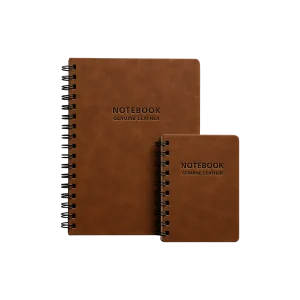
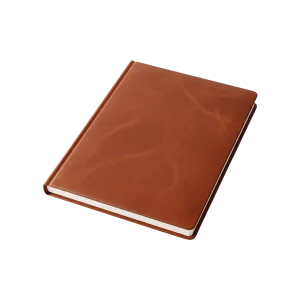
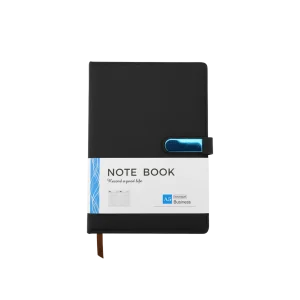
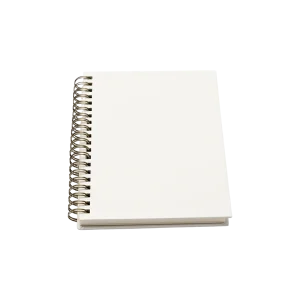










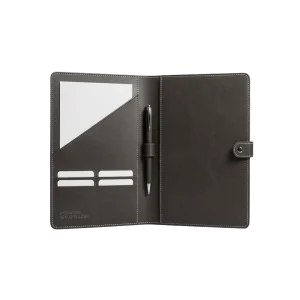
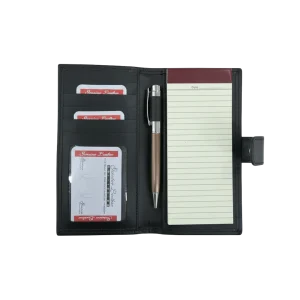






















I’ve been buying and using notebooks for over twenty years. I have a shelf, a drawer, and several boxes to prove it. Like many writers who came of age before the dominance of the screen, I believed the notebook was a sacred object, its blankness a promise. But somewhere along the line, the romance curdled into clutter. I was buying them faster than I could fill them, fetishizing the idea of writing more than the act itself. The paper quality, the binding, the cover design – these became distractions, not tools.
This realization led to a kind of stationery austerity. I switched to the cheapest, most utilitarian legal pads I could find, believing this would cure my procrastination. It didn’t. The writing didn’t improve; it just became uglier, scattered across flimsy sheets that curled and tore. I had swung from one extreme to another, missing the point entirely. The tool isn’t everything, but it isn’t nothing, either. It exists in a quiet partnership with the work. Finding the right one is a personal calibration, not a quest for the perfect artifact. For those seeking that specific balance of quality and function without pretense, exploring options from a curated selection like the acelitt store can be a practical step away from the extremes of hoarding or austerity.
The False Promise of the Perfect Blank Book
We’ve all been there. You buy a beautiful, expensive notebook with pages so pristine you’re afraid to mar them with your ordinary thoughts. So it sits. This isn’t a love of writing; it’s a performance for an audience of one, where the props matter more than the play. The industry feeds this, selling aspiration in a Moleskine wrapper.
My Experiment with Disposable Paper
My legal pad phase was a rebellion against that preciousness. If the paper was inherently worthless, I reasoned, I wouldn’t hesitate to fill it with worthless first drafts. There was a logic to it. Yet, I found I had no respect for the work. Notes got lost. Pages ripped out. The physical impermanence of the pad subconsciously signaled the unimportance of the words on it. The writing felt temporary, even when it wasn’t meant to be.
What We Actually Need from a Writing Surface
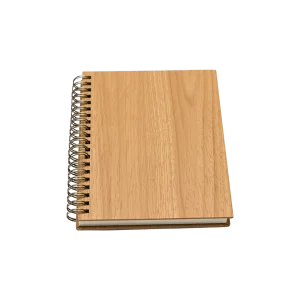
The needs are simple, yet rarely met by either luxury notebooks or basic pads. The paper must lie flat. It must accept ink from your preferred pen without feathering or bleed-through. The cover must be durable enough to survive a bag, but not so ornate it invites ceremony. It needs a spine that doesn’t crack after a week. It sounds mundane, but this reliability is what builds a daily habit. The notebook should disappear, becoming an extension of hand and thought.
The Unseen Economy of Thoughtful Design
Good design in this context is invisible. It’s the millimeter of margin that feels right, not imposed. It’s the subtle dot grid that offers guidance without the prison bars of lines or the emptiness of pure blankness. It’s the choice of a paper weight that provides a satisfying heft without bulk. This isn’t about aesthetics for their own sake; it’s about engineering a frictionless interface between your mind and the page. When you notice the design, it’s often because it’s failed.
Why the Pen Still Matters in a Digital World
This isn’t a luddite argument. I write this on a computer. But for initial ideation, for working through a tangled problem, the slowness of handwriting is the feature. The brain works at the speed of the pen. It allows for arrows, diagrams, scratched-out sentences, and side notes in a way that a blinking cursor on a white screen does not. The physicality anchors the thought. The right pen – one that flows consistently without skipping or globbing – removes a tiny layer of cognitive resistance. It’s a small thing, but over hundreds of pages, these small things add up.
Building a System, Not a Collection
The goal is a working system, not a museum of possibilities. This means settling on a format and sticking with it for a significant project or period. It means buying one notebook at a time, with the intent to use it. It means finding a pen you like and buying a box of refills. The system’s value is in its predictability. You stop thinking about the tools and start thinking with them.
An Opinion on Sustainability and Stuff
I have doubts about the ‘green’ marketing often slapped onto consumer goods. Yet, with stationery, the most sustainable act is to buy a well-made product and use all of it. A durable notebook that lasts a full year is inherently less wasteful than ten cheap ones that fall apart. It’s about thoughtful consumption over reflexive acquisition. Supporting makers who prioritize materials and craftsmanship often aligns with this, creating less waste in the long run, even if it costs more upfront.
The tools we choose for our analog life are minor, but they are not trivial. They are the physical parameters of our creativity and our labor. They can stand in our way or get out of it. After my pendulum swing from collector to ascetic, I’ve landed on a simple principle: use what works, and work with what you use. Everything else is just stuff on a shelf.
- A notebook must lie completely flat when open.
- The paper should handle fountain pen ink without bleed-through.
- Choose a size that fits in your most-used bag.
- A dot grid offers the most flexibility for writing and sketching.
- A cover material should be resilient to scuffs and moisture.
- The binding should withstand being opened and closed hundreds of times.
- Refillable pens reduce plastic waste and long-term cost.
- Start one notebook only after you have filled the previous one.